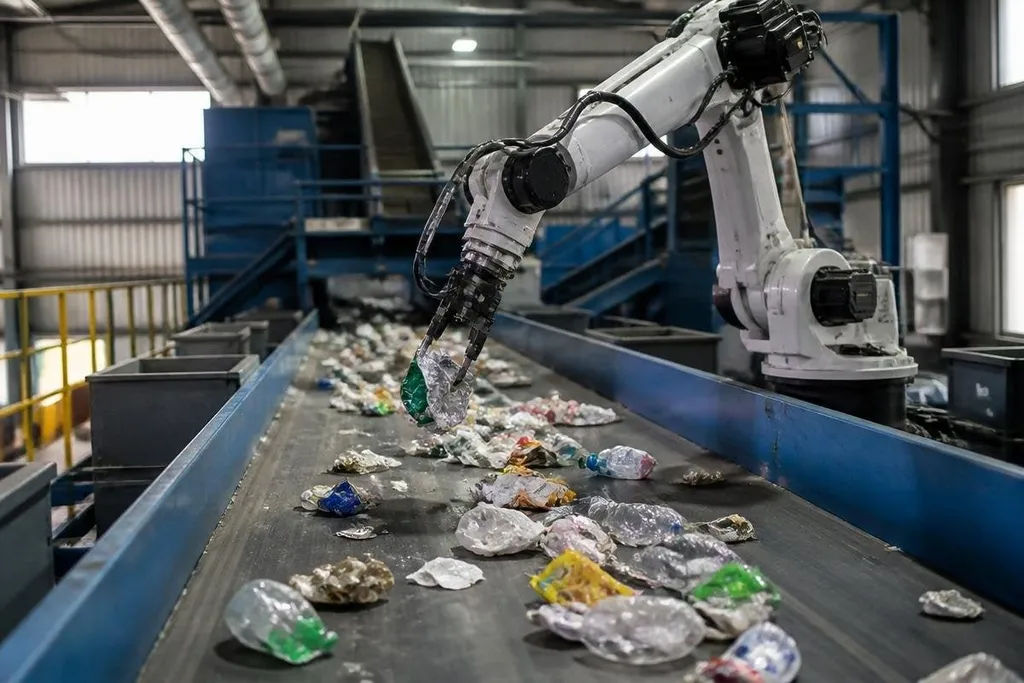
Waste robots will earn their place through cleaner sorting, safer collection, and lower running costs. The machines that matter most will work inside facilities where dust, mixed materials, tight spaces, and changing waste streams test every part of the design.
- Cameras and sensors must identify material before a gripper moves it.
- Collection robots need safe routes around people, trucks, and bins.
- Buyers need service costs, uptime records, and clear limits before signing a contract.
Sorting is the first hard test
A sorting robot must see an object, classify it, pick it up, and place it in the right stream. Each step can fail when packaging is crushed, wet, dirty, partly hidden, or mixed with another item.
Computer vision gives the robot an image of the belt. A gripper then needs enough control to move the item without tearing a bag, dropping glass, or damaging equipment beside it. The software must also handle objects the training data did not cover.
That makes belt speed and error rate more useful than a demo with clean objects. A buyer should ask how the system performs when labels face away from the camera, when objects overlap, and when the waste stream changes during the day.
The same test applies to food waste and construction waste, though the hardware may differ. Wet organic material needs tools that resist contamination, while broken concrete, wood, and metal need force, spacing, and safety controls that a light packaging line may not need.
Collection robots need a safe route
A mobile robot moving bins has a different job from a sorting arm. It must locate the bin, plan a route, avoid people, stop near vehicles, and return for charging or service.
That route is rarely empty. Workers cross loading areas, doors open without warning, and bins can block the path. A useful system must stop safely and recover when the planned route no longer works.
Autonomous operation also depends on site design. Clear floor markings, fixed pickup points, and reliable maps can make a pilot work. A facility with narrow aisles and shifting stacks may need remote control for part of the task.
Mixed loads, wet scraps, and damaged containers can change a sorting run from one shift to the next. Reports from Robot24.com can name the waste stream, machine, test site, and date behind a result, giving you facts to check before pricing the work.
The business case is more than the robot
A waste company pays for the machine, its sensors, software, charging equipment, service visits, and staff training. The cost of changing a site can matter as much as the purchase price.
The useful measure is the work completed per shift. A sorting arm that needs frequent cleaning may lose time even if its pickup rate looks good in a short trial. A mobile robot that stops often can leave staff carrying the bins by hand.
Service access matters too. Ask who replaces damaged sensors, how long spare parts take to arrive, and whether the software needs a paid support plan.
Waste sites are hard on equipment, so a sealed enclosure, washable surfaces, and clear maintenance steps can affect the result more than a polished demonstration.
Safety needs the same level of detail. Buyers should ask for the stop distance, worker detection method, restart process, and records from live sites. A system that works near people must show how it behaves when someone steps into its path.
A buyer’s check before a pilot
Use this list before moving from a demonstration to a site trial:
- Define the waste stream: record the materials, object sizes, moisture, contamination, and daily changes.
- Set the work measure: choose picks per hour, bins moved per shift, sorting accuracy, or another number tied to the job.
- Test bad conditions: include blocked views, damaged packaging, wet material, poor lighting, and a stopped belt.
- Price the full setup: add installation, charging, guarding, software, training, cleaning, and service visits.
- Name the fallback: decide who takes over when the robot stops, loses its map, or finds an object it cannot handle.
I’d wait for measured site results before buying a waste robot on a demonstration alone.
The next useful proof will come from pilots that publish sorting accuracy, hours worked, stop causes, service time, and cost per handled item. Until buyers can compare those figures across real waste streams, the sorting line remains the place where robot claims meet the work.